Frequently Asked Questions
Clear, factual answers to common homeowner questions regarding structural mold remediation.
Airwell Restoration provides clear, factual answers to common homeowner questions regarding structural mold remediation, containment, and moisture control.
Our team believes that informed property owners make better decisions regarding structural preservation and indoor environmental quality.

Speak With Our Dispatch Team
When water leaks or moisture intrusion affect structural building materials, prompt containment prevents spore dispersal. Contact our dispatch desk to discuss property conditions and coordinate an on-site evaluation.
Process and Containment Questions
Understanding the mechanical sequence of professional remediation helps property owners know what to expect during a project.
Professional remediation involves moisture source identification, physical containment isolation, continuous HEPA air filtration, selective removal of damaged porous materials, mechanical cleaning of structural framing, and industrial dehumidification. Each phase builds upon the previous step to systematically eliminate mold growth and dry structural timbers. Technicians monitor framing moisture daily until materials reach baseline dry standards.
Moisture Control and Recurrence Questions
Why moisture management is the single most critical factor in controlling indoor fungal growth
Indoor mold requires moisture, oxygen, and an organic food source such as drywall paper, wood framing, or carpet backing to germinate.
When unresolved plumbing leaks, roof penetrations, or unmanaged indoor humidity wet building materials for 24 to 48 hours, dormant spores colonize the wet surface. Without sustained moisture, mold cannot establish colonies or spread across building assemblies.
Mold spores exist naturally in all outdoor and indoor environments, making complete sterilization of a residential structure physically impossible. Permanent mold prevention requires keeping indoor relative humidity below 60 percent and repairing plumbing leaks promptly.
- What causes growth: Moisture contact with cellulose building materials for 24 to 48 hours.
- Can mold return: Yes, if new leaks or high humidity reintroduce moisture to organic materials.
- Why repair leaks first: Stopping active water ensures industrial dehumidifiers can dry framing permanently.
- Target relative humidity: Below 60 percent, with an optimal indoor range between 30 and 50 percent.
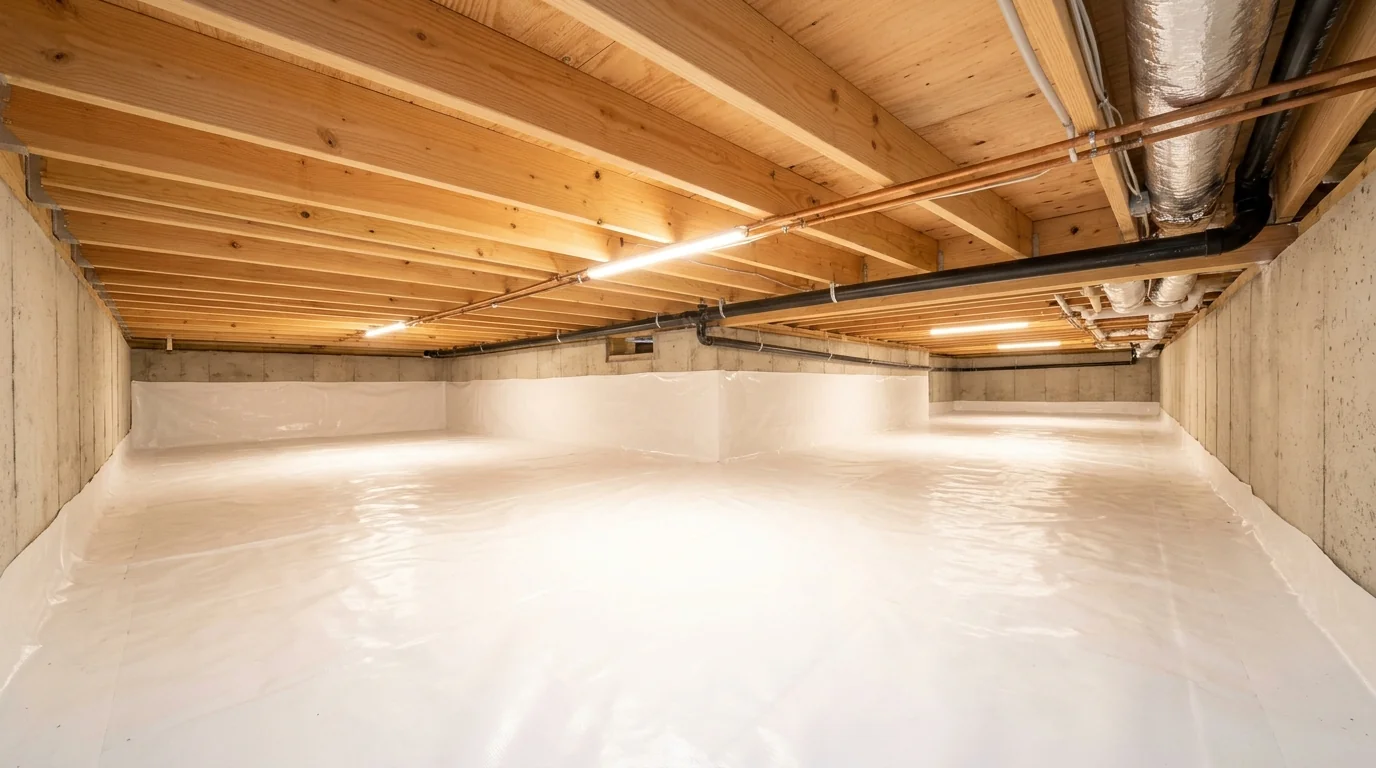
Psychrometric Drying Dynamics
How moisture control halts spore germination across residential framing
Building Materials and Cleaning Methods
Different building materials respond differently to moisture and fungal colonization based on their internal porosity.
| Material Type | Porosity Level | Remediation Methodology |
|---|---|---|
| Gypsum Drywall & Insulation | High Porosity | Controlled removal, sealed bagging, and disposal; microscopic roots penetrate deep into paper fibers, preventing effective surface cleaning |
| Structural Wood Framing | Semi-Porous | Preserved via HEPA vacuuming, mechanical wire brushing, sanding, antimicrobial surface application, and deep structural dehumidification |
| Ceramic Tile & Ductwork | Non-Porous | Surface HEPA vacuuming, detergent wiping, complete drying, and sanitizing; mold cannot penetrate hard non-porous surfaces |
| Bleach Applications | Chemical Limitation | Not recommended on porous materials; fails to penetrate wood pores and introduces excess water into building assemblies |
Controlled removal of compromised porous substrates is the only reliable way to eliminate deeply rooted contamination.
Health and Living Conditions Questions
Indoor mold exposure can affect residential comfort and air quality. Public health guidance outlines general symptoms and exposure considerations without making specific medical diagnoses.
- Common Exposure Symptoms: Exposure to indoor dampness can cause nasal congestion, sneezing, coughing, wheezing, throat irritation, and eye redness.
- Sensitive Populations: Individuals with diagnosed asthma may experience aggravated respiratory symptoms, and immunocompromised persons face higher sensitivity.
- Mold Coloration: Public health agencies do not consider any single mold color uniquely hazardous; all indoor molds should be treated with the same containment protocols.
- Normal Occupancy Clearance: A space is remediated when all visible growth is removed, framing moisture returns to baseline dry standards, and surfaces pass visual inspection.
Insurance and Evaluation Questions
General guidance regarding insurance policies, third-party testing, and professional vs. DIY considerations.
Homeowner insurance coverage typically depends on the specific cause of the underlying moisture event rather than the mold itself. Most standard homeowner insurance policies only cover remediation if it results directly from a sudden and accidental covered peril, such as a burst plumbing supply line. Gradual leaks, recurring groundwater seepage, and long-term unaddressed humidity are generally excluded under standard property insurance terms.
Get Answers and Schedule Help Today
If you suspect hidden moisture or discover visible mold growth, timely containment protects your home.
Airwell Restoration delivers methodical containment, selective demolition, and industrial drying nationwide.
Contact our telephone dispatch team at (831) 298-4645 to discuss your property conditions and arrange an on-site moisture evaluation.