Our Mold Remediation Process
Structured containment, continuous air filtration, and controlled structural drying.
Our mold remediation process uses structured containment, continuous air filtration, and controlled structural drying to eliminate fungal growth and excess moisture.
Airwell Restoration applies this systematic workflow across residential properties nationwide to protect structural framing and indoor environments.
Speak With Our Dispatch Team
When water leaks or moisture intrusion affect structural building materials, prompt containment prevents spore dispersal. Contact our dispatch desk to discuss property conditions and coordinate an on-site evaluation.
Step 1: Moisture Assessment and Source Identification
Locating water intrusion pathways before physical work begins
Every successful remediation project begins by locating the moisture intrusion that enabled mold spores to colonize building materials.
Technicians use non-invasive moisture meters and thermal imaging tools to trace moisture pathways behind finished surfaces. Resolving active water sources is required before physical remediation begins to ensure building assemblies dry permanently.
- Inspection of plumbing fixtures, supply lines, drain pipes, and roof penetrations for active leaks.
- Moisture mapping of structural framing timbers, drywall assemblies, and subfloor layers.
- Measurement of ambient relative humidity and temperature to determine indoor dew point levels.
- Identification of visible fungal colonization and tracking of damp structural perimeters.
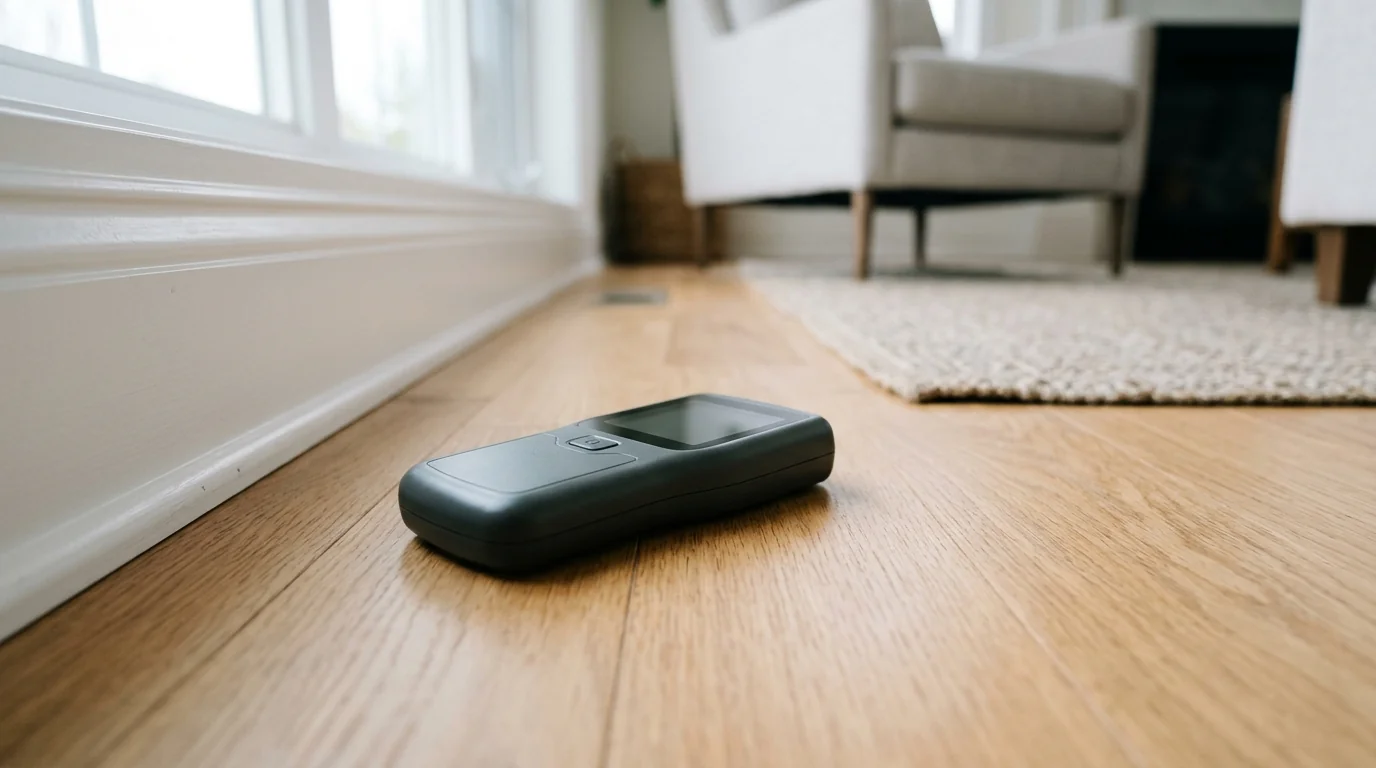
Moisture Detection & Mapping
Electronic moisture meters determine boundaries of hidden dampness
Step 2: Isolation and Engineering Containment
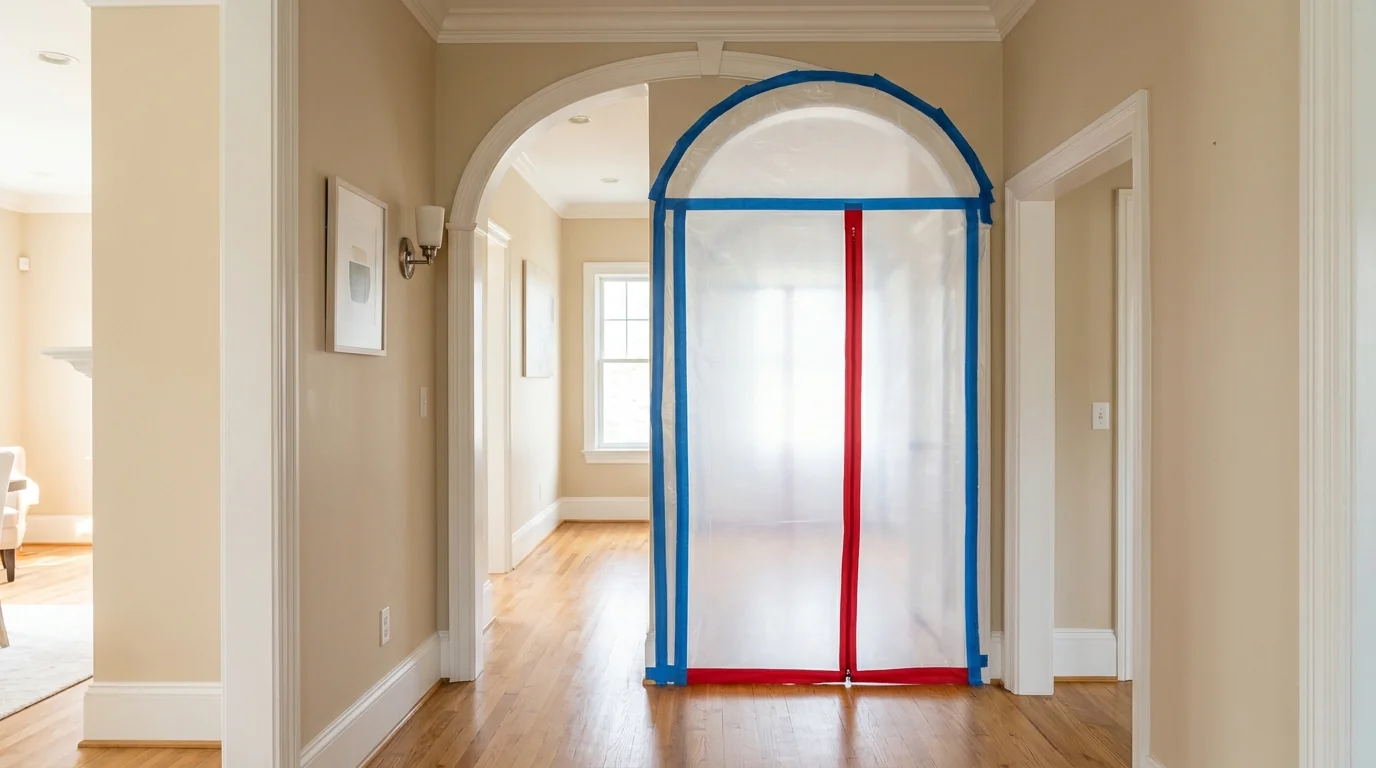
Before disturbing any contaminated building materials, technicians establish physical containment barriers to isolate the work zone. This critical engineering control prevents aerosolized fungal spores from migrating into clean living quarters.
- Construction of airtight barriers using heavy 6-mil polyethylene sheeting sealed with specialized tape.
- Installation of multi-stage zipper decontamination chambers to control entry and exit from the workspace.
- Sealing of HVAC supply and return air registers to prevent distribution through central ductwork.
- Deployment of negative air pressure machines that exhaust filtered air outside the building envelope.
Step 3: Continuous HEPA Air Filtration
Capturing airborne mold spores and microscopic particulate debris.
Commercial HEPA filters maintain rigorous particulate reduction.
Exhausting scrubbed air outward to prevent room cross-contamination.
Scrubbers operate through demolition, cleaning, and drying phases.
Step 4: Selective Removal of Compromised Porous Materials
Building materials respond differently to fungal colonization based on their internal porosity. Porous materials absorb moisture deeply, allowing fungal hyphae to penetrate beyond the surface.
| Material Category | Common Building Substrates | Recommended Remediation Protocol |
|---|---|---|
| Porous Materials | Gypsum drywall, acoustic ceiling tiles, fiberglass insulation, carpet padding | Controlled demolition, sealed bagging inside containment, and replacement; root penetration prevents surface cleaning |
| Semi-Porous Substrates | Dimensional lumber (framing studs, joists), plywood subflooring, concrete block | HEPA vacuuming, mechanical wire brushing or sanding, EPA-registered antimicrobial application, and structural drying |
| Non-Porous Surfaces | Glazed ceramic tile, metal ducting, PVC piping, architectural glass | HEPA vacuuming, damp wiping with mild detergent, complete surface drying, and sanitation |
Contaminated items are placed in heavy 6-mil waste bags and sealed inside containment before disposal.
Step 5: Mechanical Cleaning and Surface Treatment
Semi-porous structural components like dimensional wood studs, floor joists, and concrete masonry cannot be easily removed without compromising structural stability. Technicians clean these structural elements using specialized mechanical methods.
HEPA Vacuuming
All exposed framing surfaces undergo thorough vacuuming to capture loose spores and settled fungal dust.
Mechanical Abrasion
Controlled wire brushing and sanding physically remove fungal hyphae embedded within surface wood grain.
Damp Wiping
Structural framing and masonry substrates are damp-wiped using specialized cleaning agents to capture residual debris.
Antimicrobial Surface Treatment
Application of an EPA-registered antimicrobial surface treatment inhibits future microbial colonization on cleaned timbers.
Step 6: Structural Drying and Dehumidification
Removing visible growth is only part of the solution; structural framing must be dried thoroughly to prevent new spore germination.
Positioning Commercial Air Movers
High-velocity axial air movers direct continuous airflow across damp wood studs, sill plates, and subfloors to accelerate evaporation.
Industrial Dehumidifier Operation
Low-grain refrigerant dehumidifiers extract gallons of water vapor from the enclosed air volume daily.
Regulating Relative Humidity
Ambient humidity is maintained between 30 percent and 50 percent inside containment to draw moisture out of structural timbers.
Moisture Probe Verification
Technicians monitor wood moisture content daily until framing drops below baseline dry standards (typically under 16 percent).
Post-Remediation Verification Principles
Once physical cleaning and structural drying are complete, the work zone is evaluated to confirm that remediation objectives have been met. The goal is returning the space to normal background fungal ecology (Condition 1).
Visual Inspection
High-intensity lighting confirms the complete absence of visible dust, debris, and fungal staining.
Moisture Verification
Calibrated penetrating moisture meters verify that structural framing timbers have returned to baseline dry standards.
Third-Party Verification
Independent indoor environmental professionals are welcomed to conduct independent sampling if documentation is required.
Careful Decommission
Controlled decommissioning of negative air machines and systematic dismantling of containment barriers.
Why a Methodical Workflow Matters
Protecting clean areas and addressing structural dampness permanently
Skipping steps or relying on superficial spray treatments leaves hidden moisture pockets intact within wall cavities and subfloors.
A methodical sequence of containment, filtration, selective removal, and drying addresses both visible colonies and concealed dampness.
- Protects clean living quarters from accidental cross-contamination during demolition.
- Ensures that compromised porous substrates are removed rather than temporarily painted over.
- Eliminates structural moisture reservoirs so framing timbers stabilize naturally.
- Provides property owners with transparent documentation of framing moisture levels.
Methodical vs. Surface-Only Remediation
Systematic extraction versus cosmetic encapsulation
Arrange an On-Site Evaluation Today
If your property has experienced water intrusion or shows signs of mold colonization, prompt action is critical.
Airwell Restoration provides structured containment, selective demolition, and industrial drying nationwide.
Call our dispatch center at (831) 298-4645 to discuss your property conditions and schedule an on-site evaluation.